

How AI can help Businesses follow up with Customers

Lead response research has found the same thing for years, across different industries and study designs. A lead contacted within five minutes converts dramatically better than one contacted an hour later, sometimes by a factor of twenty or more. Separately, a widely cited pattern in sales data shows that close to half of salespeople never attempt a second follow-up after the first contact, even though most customers only say yes after several touches. Put those two findings together and the pattern is obvious: the businesses winning more deals aren't necessarily better at selling. They're just still in the conversation when the customer is ready to decide.
AI customer follow-up tools exist specifically to close that gap. The category is broader than it looks from any single vendor's homepage, so here's the actual landscape, organised by how each type works.
Types of AI follow-up Tools
CRM-embedded follow-up AI
Tools like Monday CRM and Follow Up Boss build follow-up features directly into a CRM you're likely already using: AI-drafted emails based on lead history, automatic summaries of past conversations, and suggested next actions surfaced without you digging through records. The advantage is that it works with data you've already collected. The limitation is the same one that applies to most CRM AI: it's only as useful as how complete and current that data actually is.
AI voice and phone follow-up Agents
Platforms like SalesCloser AI and My AI Front Desk handle follow-up over the phone specifically, calling or texting leads automatically and often operating around the clock. This category tends to matter most for real estate agents and local service businesses, where a large share of leads still expect or prefer a phone conversation over a message.
AI Email follow-up generators
Tools like Clay and Momentum AI generate follow-up email content directly from CRM records or past conversation data, mostly built for outbound sales teams sending high volumes of personalized email. The value here is speed and consistency of writing, not conversation tracking or lead management on its own.
Enterprise follow-up orchestration platforms
Platforms like Outreach coordinate follow-up sequencing across multiple channels at once, for teams with enough volume and RevOps resources to configure it properly. This tier delivers real results at scale, but it also assumes a level of setup and dedicated administration that doesn't make sense for a small team.
Channel-specific AI follow-up assistants
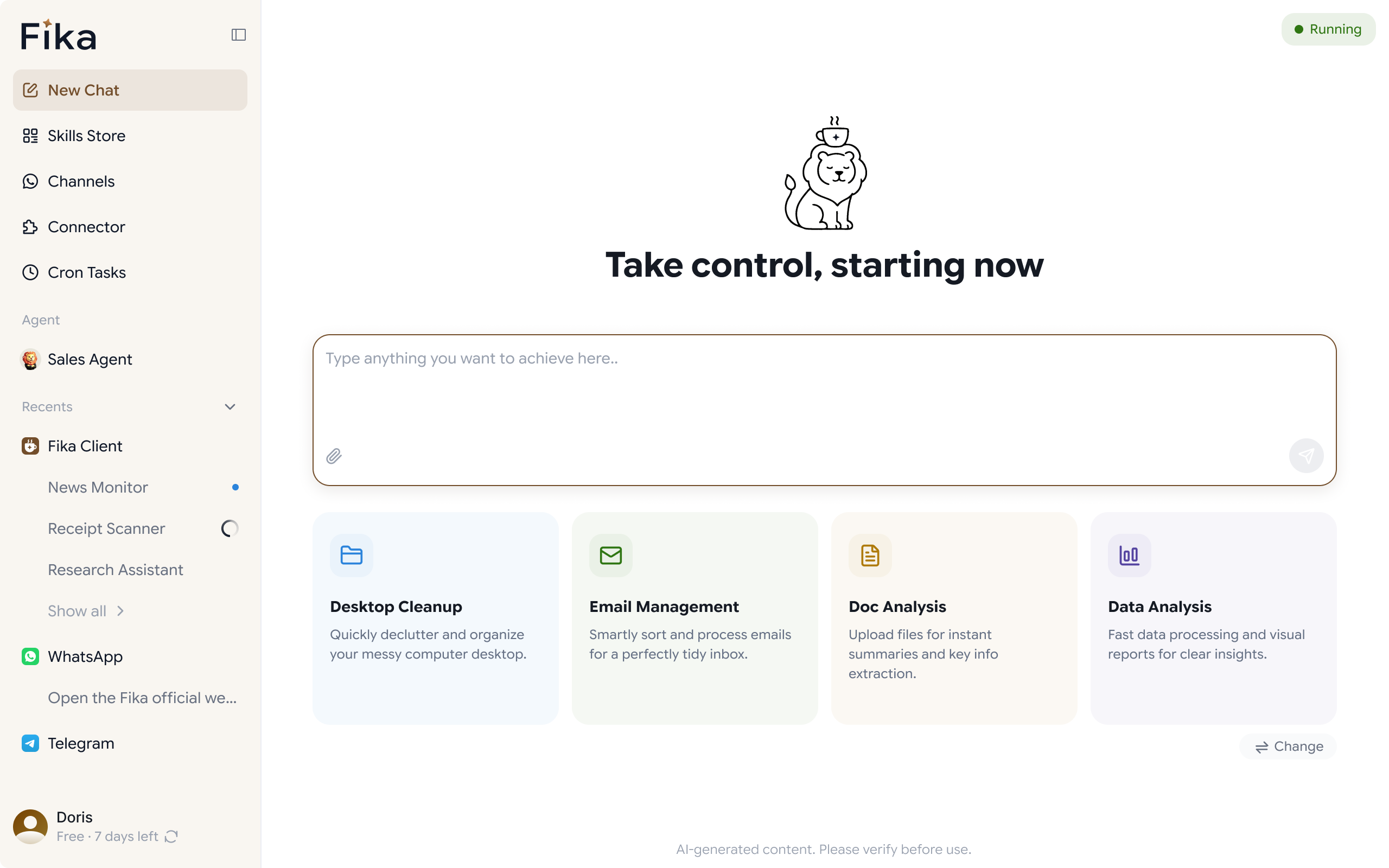
The last category is narrower by design: an AI follow-up assistant built around a single channel rather than a full sales stack. Fika's WhatsApp Sales Agent fits here, tracking conversation activity on WhatsApp specifically and flagging a follow-up the moment a conversation goes quiet, without requiring a CRM implementation first.
Factors to consider when comparing Tools
- CRM Availability
CRM-embedded and orchestration-tier customer follow-up tools generally need reliable data already in a system. Channel-specific tools generally don't, since they build a record from the conversation directly.
- Sales Channel Match
A phone-first AI voice agent won't help much if your customers exclusively message you on WhatsApp, and a WhatsApp-focused tool won't help a business that runs entirely on inbound phone calls.
- Setup Cost
Enterprise orchestration platforms tend to need weeks of configuration. Channel-specific AI follow-up assistants are usually built to be useful within the first sitting.
Matching the tool to how you need it to communicate
If your business runs a formal outbound motion with a maintained CRM and a sales team large enough to justify dedicated tooling, the CRM-embedded or orchestration-tier options above are worth the setup investment. If phone calls are how most leads reach you, an AI voice agent solves the actual bottleneck more directly than anything email-based.
If neither describes your business, and your leads mostly show up as WhatsApp messages that occasionally go unanswered for a few days too long, AI for customer communication doesn't need to mean any of the above. It means something closer to: track the conversation, notice when it's gone quiet, and have a relevant follow-up message ready before the lead has fully cooled off.
How Fika fits
Fika's WhatsApp Sales Agent is an AI lead follow-up tool built for exactly that narrower case. It monitors every customer conversation happening on WhatsApp, flags any that have gone quiet past a threshold you set, and drafts a follow-up message based on the actual conversation history rather than a generic template. No CRM setup, no RevOps configuration, no per-seat enterprise pricing.
It won't replace an orchestration platform for a team running formal multi-channel outbound at scale. For a small business where WhatsApp carries most of the follow-up burden, it's a closer match than tools built for a different shape of sales process entirely.
Frequently Asked Questions
Do I need a CRM before I can use an AI customer follow-up tool? Not for the channel-specific category. Tools built around a single channel, like WhatsApp, build their own record of the conversation as it happens, which is different from CRM-embedded tools that rely on data you've already entered elsewhere.
Is a more expensive, enterprise-tier follow-up platform always more effective? Not necessarily more effective, just built for a different scale..
How quickly should a follow-up actually go out? Sooner than most businesses manage manually. Response speed research consistently shows a sharp drop-off in conversion the longer a lead waits after their first message, which is the core reason automated tracking outperforms relying on memory, regardless of which category of tool is doing the tracking.