

AI for Sales: How small teams can sell smarter

Most guides to AI for sales are written for teams with dedicated SDRs, a full CRM implementation, and a pipeline big enough to justify a stack of specialised tools. Sales reps at those companies spend a significant amount of their time on work that isn't actually selling: updating records, hunting for collateral, chasing internal approvals, which is exactly the kind of overhead AI sales tools are built to cut. That's a real problem, just not always the one a two-person team is dealing with. A team of two or three people rarely has the CRM data quality, deal volume, or dedicated admin overhead that makes an enterprise sales stack pay for itself.
This covers the actual landscape of AI sales tools, organised by what they do rather than who sells them, and where a small team gets genuine leverage from it instead of buying more software than the problem calls for.
Why "AI for Sales" means different things at different team sizes
The category spans prospecting, CRM data management, meeting intelligence, coaching, and forecasting: a full sales operation's worth of tooling, largely built with a B2B tech sales org in mind. Research on small-team adoption suggests something specific: teams under roughly 10-15 people tend to get better returns from tools that cut admin overhead directly, rather than from replicating an enterprise stack at a smaller scale. The category is broad. What actually matters to a specific team is usually one piece of it.
The Main Categories of AI Sales Tools
Prospecting and Outbound
Tools like Apollo.io pair large contact databases with AI-assisted email drafting and sequencing, while platforms like Artisan and AiSDR go further, handling outbound email largely on their own. This category is built for teams that need to generate their own pipeline from cold or lightly-warmed leads.
CRM and Pipeline Data
Salesforce Einstein and HubSpot's Breeze AI build AI directly into the CRM: drafting emails, qualifying leads, filling in fields, and surfacing recommendations from data that's already there. The value depends entirely on how much reliable data is already in the system. AI built on messy CRM data tends to produce messy recommendations.
Meeting Intelligence and Coaching
Tools like Read AI and Gong sit on top of sales calls, producing transcripts, summaries, and coaching insights, then pushing that information back into the CRM automatically. Useful for teams that lose a lot of context between a call happening and someone remembering to log it.
Lead Response and Follow-Up
This is the category that gets the least attention in most "best AI sales tools" roundups, and it's often where small teams have the most to gain. Teams typically lose deals because a promising conversation quietly stalls a follow-up that was supposed to go out doesn't, a note from a call never makes it anywhere useful, and nobody has a clear view of which conversations are actually still moving.
The caveat about "Full AI Agents"
Fully autonomous "AI agent" products that promise to replace an SDR outright tend to be expensive, fail in ways that aren't obvious until something has already gone wrong, and need more oversight than a small team realistically has time to provide. The tools that hold up better for small teams tend to augment a person's work rather than try to remove the person from it entirely. That distinction is worth checking before signing up for anything described as a fully autonomous agent.
Where the real Leverage is for a small team
If your "sales team" is two or three people, and your sales process looks less like a formal outbound motion with a dedicated CRM and more like responding to inbound inquiries as they come in, the prospecting, forecasting, and coaching categories above mostly don't apply yet. AI lead management in that context means something narrower and more immediate: making sure every inbound conversation gets a fast reply, and making sure none of them go quiet without someone noticing.
This is where sales automation AI earns its keep for a small team specifically: not by replicating an enterprise sales stack, but by closing the one gap that actually costs deals, the follow-up that should have gone out and didn't.
How Fika fits
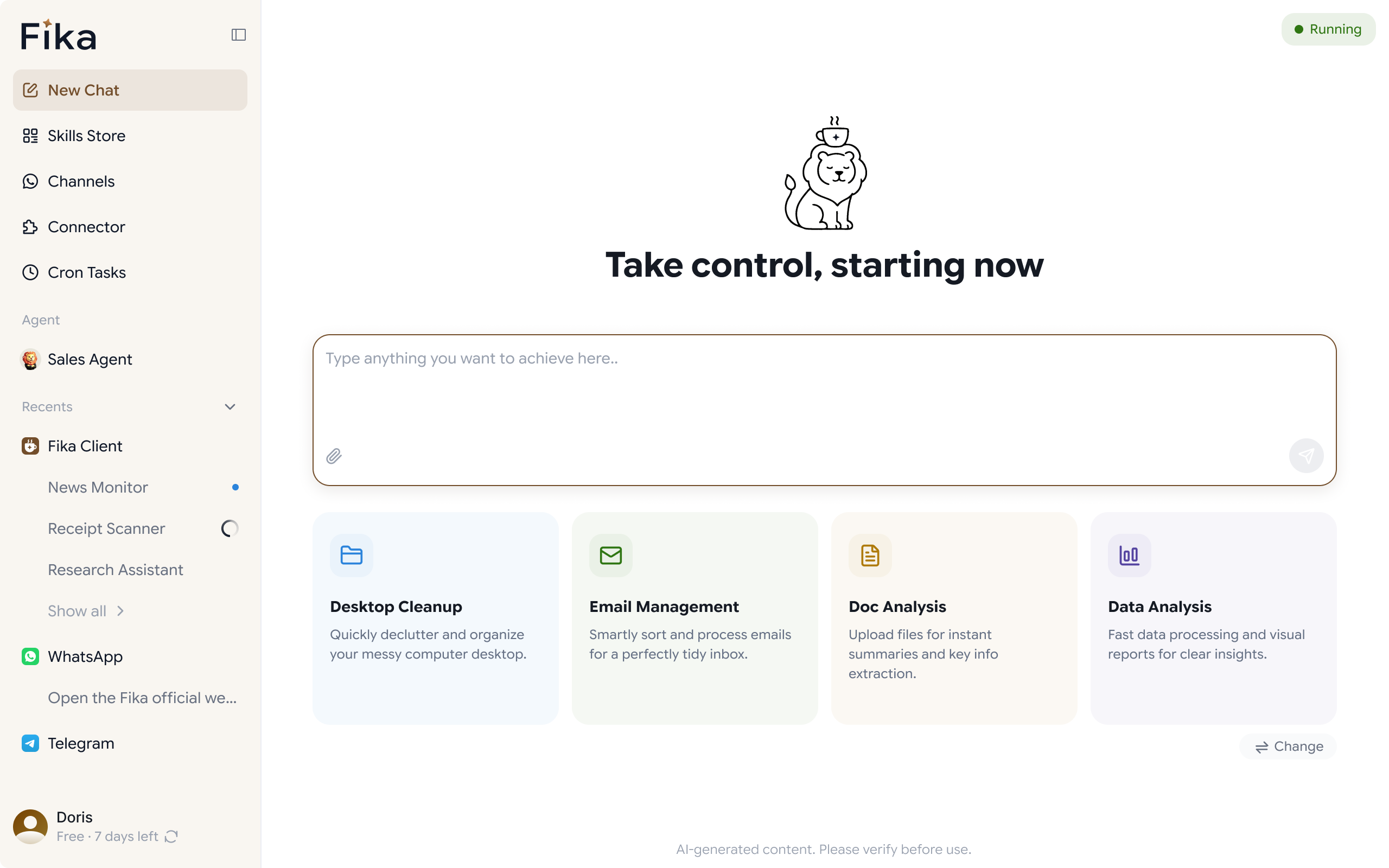
Fika's WhatsApp Sales Agent is built for exactly this narrower case, not as a competitor to Apollo, Gong, or HubSpot for teams running formal outbound. It works as an AI sales assistant for teams whose leads mostly arrive through WhatsApp: drafting contextual replies to inbound messages, building a record of every conversation automatically, and flagging follow-ups the moment a conversation goes quiet.
If your team's actual bottleneck is outbound prospecting or CRM data quality, the tools in the categories above are the right place to look. If it's inbound leads going unanswered or unfollowed, that's the specific problem Fika solves.
Frequently Asked Questions
Do I need a CRM before any of this makes sense? Not necessarily. AI lead management tools built around a specific channel, like WhatsApp, can track conversations and follow-ups without requiring a separate CRM implementation first.
Is it worth paying for an enterprise-tier AI sales tool early, before we've outgrown the basics? Usually not. Teams get better returns from tools that solve a specific bottleneck than from adopting a full stack built for a much larger sales organisation.
How do I know which category actually applies to my team? Look at where deals are actually being lost. If it's cold outbound not generating enough pipeline, that's prospecting. If it's messy CRM data producing bad recommendations, that's data hygiene.