

The Three Weeks That Break a Small Business's WhatsApp

Black Friday starts the rush. Christmas delivery deadlines push it further. Returns and exchanges carry it into January. For roughly six weeks, a WhatsApp inbox that normally runs smoothly gets tested harder than any other point in the year, and most businesses prepare for the sale itself without preparing for what the sale does to their messages.
What Floods your WhatsApp during the holiday season
The questions change shape as the season moves, but the pattern stays the same: the same handful of questions, repeated hundreds of times, arriving faster than one person can answer them.
Black Friday brings stock and discount questions. Is this item still available? Does the code work? Did my payment go through? These customers are seconds from paying, so a slow reply here is a lost sale, not just a delayed one.
Early to mid-December shifts almost entirely to one question: will this arrive by Christmas? It is one of the most common messages any online seller gets in December, and customers ask it with real urgency, because a late gift is worse than no gift at all.
Late December into January brings the return and exchange wave, plus a smaller spike of post-holiday shoppers using gift money or looking for post-Christmas deals.
None of these questions need judgment. They need a fast, accurate answer, which is exactly where a manual inbox falls apart under volume. A business that replies to 20 messages a day comfortably can face 200 overnight, and the gap between replying in minutes and replying tomorrow is where sales and goodwill are both lost.
Why a slow reply costs more during the holidays
A delayed reply during a normal week costs you one slightly annoyed customer. A delayed reply during the holiday season costs you the sale entirely, because that customer has four other tabs open and a dozen other sellers happy to answer faster. The Christmas delivery question is the sharpest version of this. A customer asking if an item will arrive in time is deciding, in that moment, whether to buy from you or go elsewhere. Answer within minutes with a clear delivery date and you keep the sale. Answer tomorrow and you have likely lost it, gift deadlines don't wait.
Preparing your WhatsApp for the last quarter of the year
In late October, review last year's holiday messages if you have them, or your busiest week this year if you don't, and note which questions came up most at each stage of the season. Confirm your stock numbers are accurate, since nothing causes more back-and-forth than promising an item you don't have.
By mid-November, draft your Christmas delivery cutoff dates for every shipping method you offer, and have them ready to quote before the "will it arrive by Christmas" messages start. Draft answers to your other common questions too, so nothing has to be written from scratch mid-rush.
In early December, start quoting your delivery cutoff in every relevant reply, clearly and consistently, so customers can decide quickly rather than asking twice. After Christmas, have your return and exchange policy ready to paste or reference instantly, since this wave arrives fast and often all at once.
Throughout all of it, confirm who is covering WhatsApp and when, and who backs them up during the peak hours. The holiday season does not pause for a lunch break.
Where AI carries the load
The questions that flood a WhatsApp inbox through this stretch are exactly the kind that do not need a person: repetitive, structured, and the same for the hundredth customer as the first. That is a different problem from a complicated complaint or a custom request, which still deserve a human's attention.
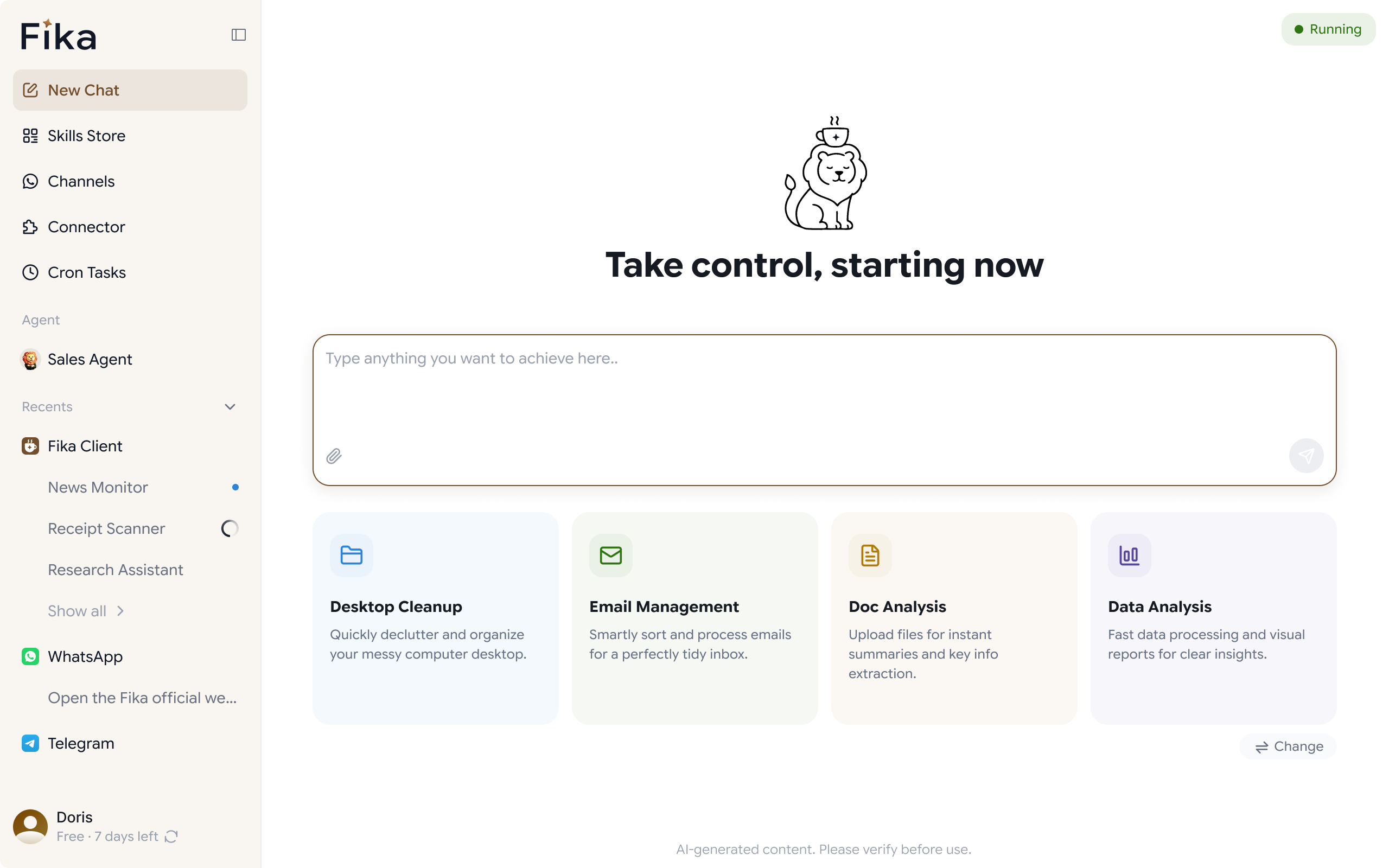
Fika's WhatsApp Agent replies to these questions the moment they arrive, in whatever language the customer writes in, and keeps a record of the conversation so nothing gets lost in the volume. A stock question in November, a delivery-deadline question in December, and a return request in January all get answered instantly instead of waiting in a backlog, while the conversations that actually need a person are the ones left for you to handle. That also means the six busiest weeks of the year do not require a seasonal hire. The same setup already running your WhatsApp sales simply absorbs the extra volume as it moves through each stage.
A Checklist for the Holiday Stretch
- Confirm stock levels before Black Friday, and again before the Christmas delivery cutoff.
- Set your Christmas delivery cutoff dates by shipping method, and have them ready to quote instantly.
- Draft answers to your most common questions at each stage: discounts, delivery, returns.
- Decide who covers WhatsApp during peak hours across the full six weeks, and who backs them up.
- Make sure routine questions get answered instantly, not just whenever someone is free.
FAQ
What's the most common WhatsApp question during the holidays?
In November it's stock and discount questions. In December it shifts almost entirely to whether an order will arrive by Christmas. In January it's returns and exchanges.
Does Fika handle WhatsApp broadcast campaigns for sales events?
No. Fika focuses on replying to customer conversations, answering questions, and following up, rather than sending promotional broadcast messages.
Can an AI agent handle holiday volume without extra seasonal staff?
For routine questions like stock, delivery deadlines, and return policy, yes. Complaints and custom requests still benefit from a person, but those make up a small share of the volume.
How early should I prepare my WhatsApp for the holiday season?
Start reviewing last year's volume in late October, have delivery cutoff dates ready by mid-November, and keep your return policy on hand from late December.